

Stronger People, Stronger Teams
Systemic Enneagram Coaching for Conscious Leadership
Shift into relief
Learn practical tools
Work better together
Even good people can get lost.

You work hard, but still feel stretched, reactive, or unseen.
Clarity is needed, but difficult conversations are avoided.
Your team relies on you too much instead of stepping up.
The same challenges keep repeating despite your best efforts.
And your bottom line suffers.
From attrition, bad decisions, lost time, lost opportunities.
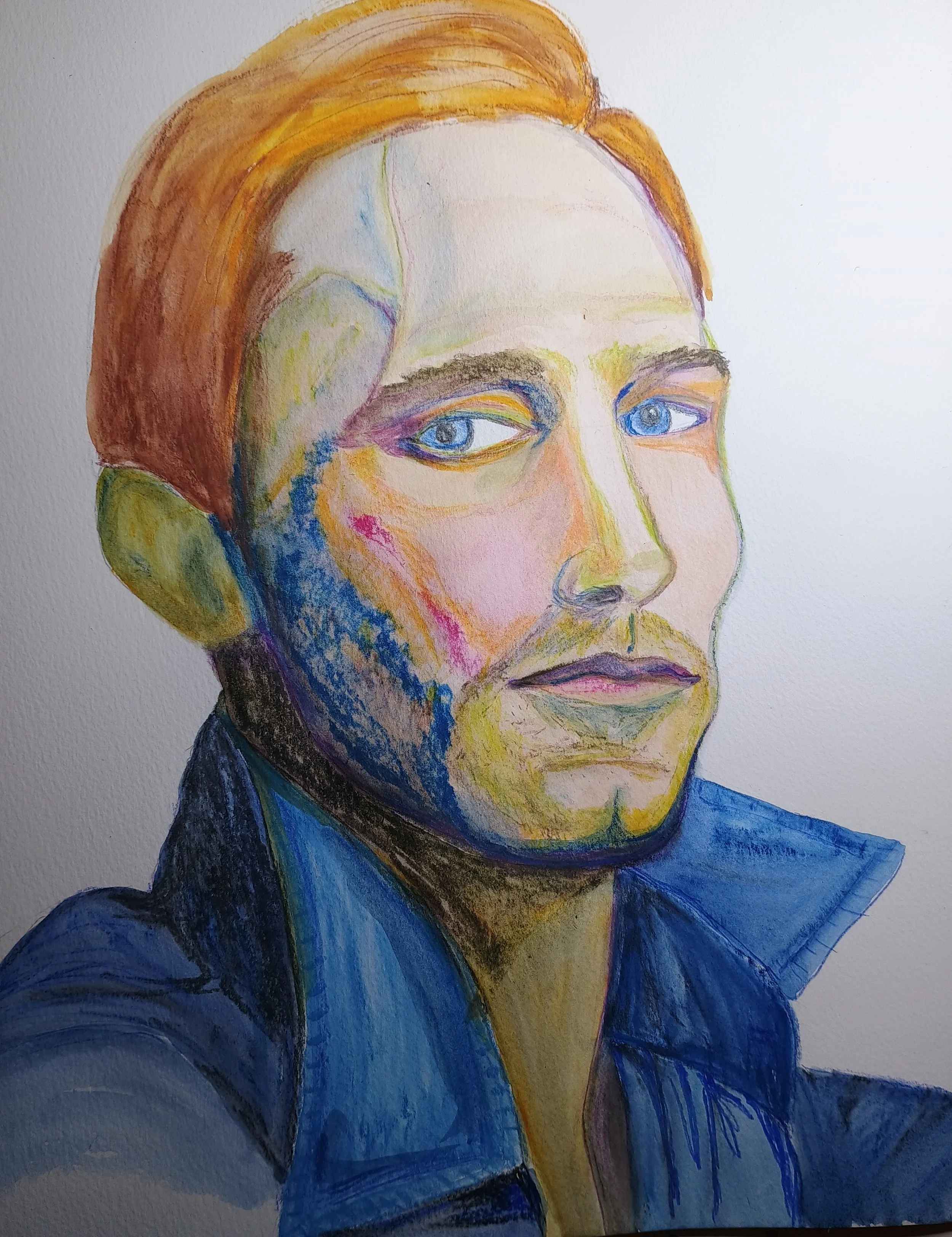
Shift into Relief
We work badly when we feel weakened, defensive and isolated.
In a new role, with new challenges, or under pressure this can happen easily. That is where we are often on autopilot, following patterns that seem to help in the moment but don’t resolve anything: avoiding difficult conversations, overthinking, acting without clarity, being run by a sense of urgency, feeling overwhelmed, on edge or helpless.
Conscious leadership unlocks the door from feeling locked in a bad situation
into strength, curiosity, openness and constant learning.
This requires a conscious shift. It is enabled by growing self-awareness. The feeling is one of releasing pressure. It feels like coming into a space of unfolding the wisdom, ideas and energy of yourself and the team. This leads to better decisions, better actions and working better together.
This shift also has a clear impact on results and hence the bottom line.
My coaching focuses on supporting this shift in people so they become stronger leaders and stronger teams. And your bottom reflects this.
Needed and included:
Practical Tools
I offer you the tried and tested tools and concepts for managing or leadership so you can do your best work. Like everywhere else, practical, proven tools make life so much easier.

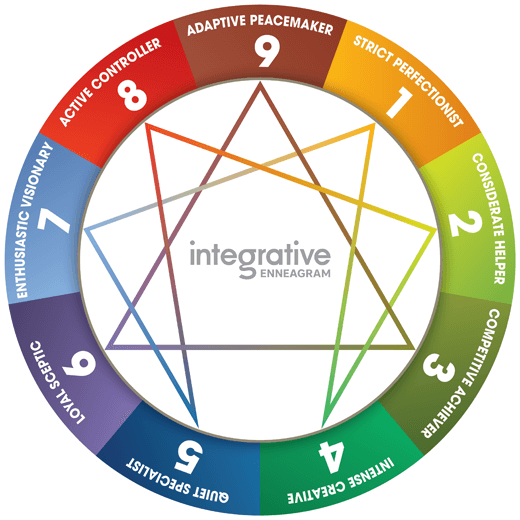
The Enneagram:
Your map for your shift.
Good leadership builds on your strengths and an understanding of your stress patterns.
The Enneagram of Personality helps you uncover the unconscious habits, fears, and beliefs that shape how you lead—especially under pressure.
It shows you what drives you, where you get in your own way, and how to shift into conscious leadership: curiosity, openness and a thirst for learning.
When you can see your patterns, you can change them.
That is how you shift into conscious leadership.
Start with your Enneagram Map

The first step towards conscious leadership is understanding yourself.
Your Enneagram Map gives you a practical, honest inner map: your drivers, your strengths, your blindspots, your stress dynamics, your repeating patterns and your growth path.
It helps you make sense of what has shaped your leadership—and what may be limiting it now. It shows you the paths you know and new, exciting ones.
Explore your personal Enneagram Map that fits where you are, and begin the work of leading with greater awareness, freedom, and strength.

My full offering for conscious leadership:
Working with me usually starts with the Enneagram Map. From there we move on to:
LEADERSHIP COACHING

Supporting leaders to
Notice what drives their reactions
Untangle habitual thinking
Step out of overthinking, second-guessing, or autopilot
Make better decisions
Holding difficult conversations
Lead with calm, grounded authority—even in complexity
See their impact on others more clearly
Break patterns that hold them—and their teams—back
TEAM COACHING
Supporting teams to:
See the hidden dynamics - ‘good’ or ‘bad’
Surface unspoken assumptions
Move into real, critical thinking
Reduce friction, misalignment, and unproductive tension
Build trust for honest, grounded conversations
Take shared responsibility for how the team functions
Think more clearly together under pressure
Work with greater alignment, focus, and effectiveness
LEADERSHIP DEVELOPMENT PROGRAM
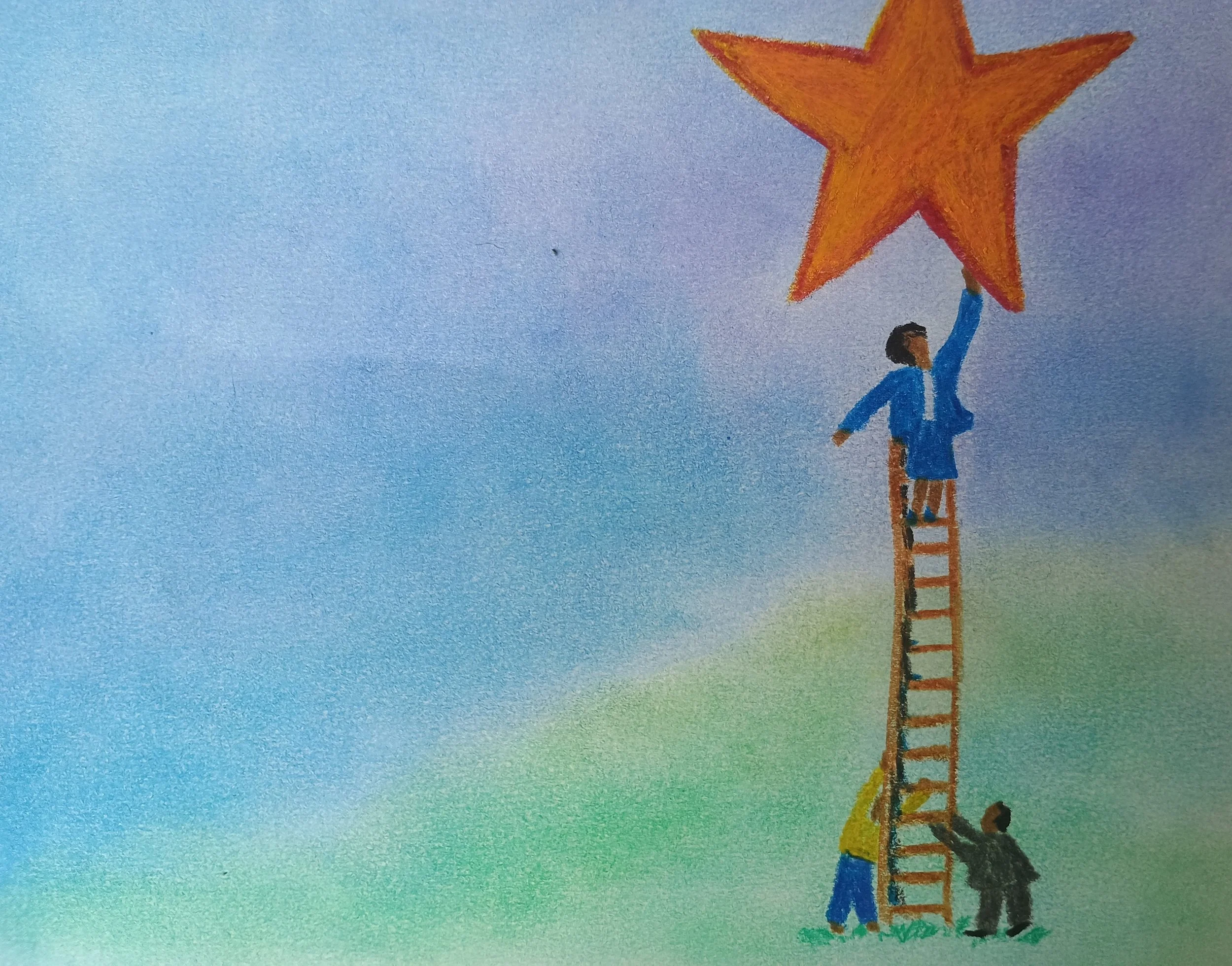
Brilliant Leaders’ Development Program:
Growing middle management teams into leadership teams,
Equiping them with the awareness and tools to grow into brilliant leaders
Programs are bespoke for the needs and goals for each company.
Typically this program runs over 8 to 12 months, with a half day group coaching once month
Moduled run on leadership as a role, holding difficult conversations, dealing with conflict, delegating, giving and receiving feedback, systemic approach to problems, decision-making, adding the strategic lense, setting boundaries, motivating others …..

Can I afford coaching?
The honest answer — backed by independent third-party data — is that the more expensive choice is almost always to do nothing.
Cost driver 1 — The productivity drag of disengagement
Disengaged employees do not quit — they stay and underperform. This is the larger, slower-moving cost and the one most companies never quantify.
Gallup quantifies the global productivity loss from disengagement at USD 438 billion in 2025 alone. In a 50-person business, a 10% productivity drag from disengagement is roughly € 160 000 / $ 185 000 / R 3 million a year of payroll you are already paying for and not getting back. Gallup's remedy — and this is from their own 2026 report — is to train managers and equip them with coaching.
Cost driver 2 — Decisions made with muddled thinking
The curse of muddled thinking shows up as decisions that get re-considered weeks later, strategies that drift, priorities that quietly multiply, and meetings that end without anyone genuinely committing to anything.
A leadership team of 8 people, each costing the business ZAR 1.5M fully-loaded per year (salary, benefits, allocated overhead), represents ZAR 12M of annual time-cost. If even 15% of that team's collective time is wasted on circular conversations, postponed decisions and rework, that is R 1.8M / $ 220 000 / € 200 000 per year. The cost of drifting strategies or unclear priorities is much higher.
Cost driver 3 — Avoidable attrition
The single largest, most under-counted line item caused by weak leadership are unwanted resignations. People do not leave companies; they leave the way they are being led.
The accepted replacement cost for a senior or executive-level employee in South Africa runs between 50% and 200% of annual salary (HR Works SA; corroborated internationally by Work Institute, SHRM).
Cost driver 4 — Loss of in-house knowledge and continuity
Industry estimates of the cost of lost institutional knowledge per senior departure typically run between 1× and 2× annual salary on top of replacement cost.
In family businesses and founder-led firms, the loss of a single right-hand operator can stall succession by a year or more. For specialised roles the knowledge may be effectively irreplaceable in the short term.
Partner with a seasoned expert

I’ve got you. Since 2008, I have worked as a professional coach in my own practice. I have assisted many clients in diverse industries, in SA and internationally. My coaching log shows many thousands of coaching hours. I am one of the most experienced coaches on the market. I started building my coaching skills more than a decade before coaching became a valued leadership development tool.
I am accredited with the International Coach Federation as a professional coach, with CRR as an Organisational Relationship Systems Coach, with Integrative Enneagram Solutions as an Enneagram Practitioner and with mBIT as a neuro-science based coach.
What others say.
-
Your coachees express a very high level of trust and satisfaction. They see you as a deeply empathetic, insightful, and effective coach who combines emotional intelligence with practical support.
Feedback from CoachHub for coaching 59 clients acrouss 525 sessions.
-
Claudia Brandt is an exceptional coach and I have found her assistance extremely valuable both in my professional and personal development.
Dr Stefan Smuts, Chief Clinical Officer, MEDICLINIC SOUTHERN AFRICA
-
Claudia has been instrumental for the changes in me, my staff and our company. She has had huge impact in a short time.
Elluria Breytenbach, MD of Kabloom, UK
-
Claudia is a phenomenal team coach and facilitator.
Lina Mariani , Head of J-Pal, Southeast Asia
If my approach resonates…

… let’s start a conversation
to explore expert leadership coaching,
or
to bring this work to your team, or to develop ermerging leaders, let’s discuss a tailored coaching process.
Why conscious leadership?
At work we like to see ourselves as people with informed thinking and skillful action. That’s what makes us successful. And that is true - but only partially. We overlook where our thinking gets muddled and our actions get warped. This is where frustration sits.
The Adaptive Thinking Cycle shows us how conscious leadership in organisations works, leading to success in the way we imagine.
It also shows us all the hidden places where the gremlins creep in, where unobserved patterns and unquestioned beliefs trip us up. That is where the thinking cycle breaks down.
The Adaptive Thinking Cycle
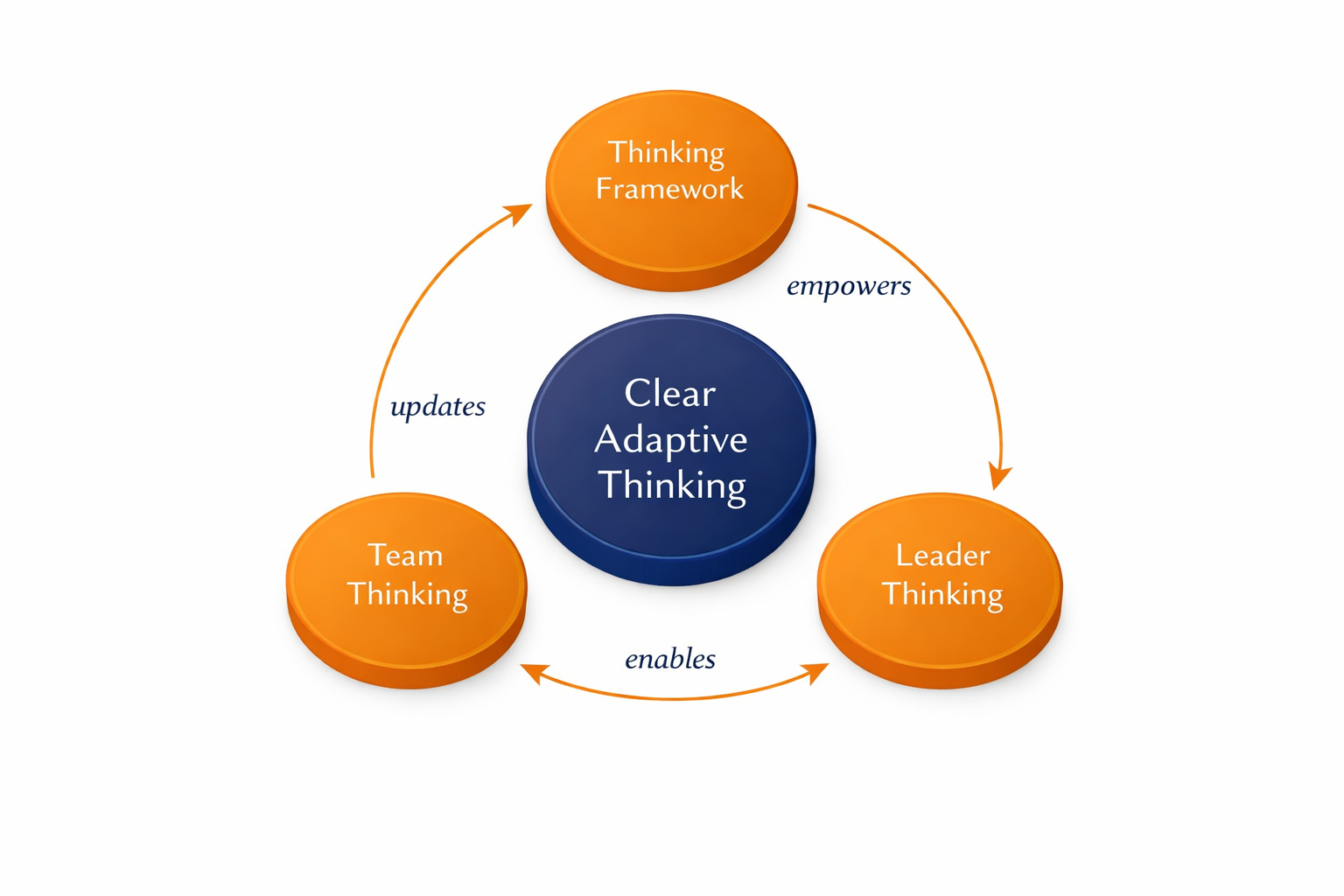
Adaptive Thinking Cycle, copyright of Claudia Brandt 2026
Clear thinking in leaders and teams is not an individual skill. It emerges from the interaction between framework, leader and team.
The Thinking Framework gives direction. It offers goals, strategy, values, culture. Ideally, it is consciously chosen and constantly adapted.
Leader Thinking shapes how the framework is lived. The more self-awareness the clearer the framework is translated into action.
Team Thinking determines how reality is faced. Its accuracy is determined by awareness.
Team Thinking in turn updates the framework — so it can adapt to what is actually happening and needed. The whole system adapts to shifting reality.
Where the gremlins creep in:
… and how to catch them. Each element of the Thinking System needs to fulfil certain requirements to do its best thinking for best results. The more consciously the organisation is led the clearer the thinking. Here is where conscious leadership matters:

Thinking Framework
requires:
clear goals
clear strategy, priorities,
clear roles / responsibility.
Leaader Thinking
requires
self-awareness,
emotional regulation.
requires
trust,
difficult conversations,
holding complexity, ambiguity, uncertainty.